Don’t look now…
Flat owners successful in private nuisance claim relating to the Tate Modern viewing platform.
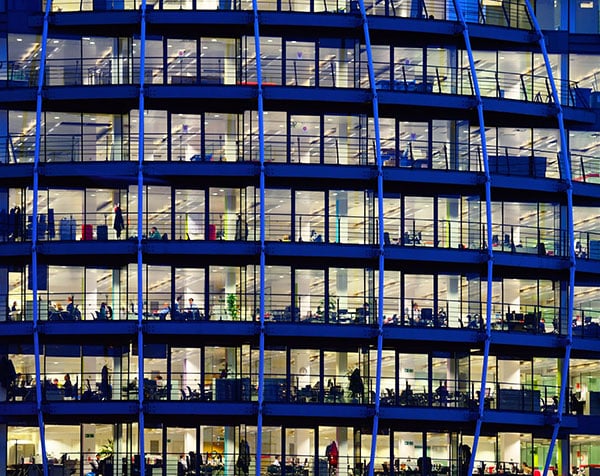
This case concerns the viewing gallery at the Tate Modern and four flats in the Neo Bankside development next door. Since the viewing platform opened in 2016, hundreds of thousands of people have visited it. The south gallery of the platform provides a direct view into Neo Bankside living accommodation.
The affected residents brought a claim based on private nuisance and sought an injunction requiring the Board of Trustees of the Tate Modern to prevent members of the public from being able to look into their flats from the relevant part of the viewing gallery walkway; or, alternatively, an award of damages.
A majority decision…
In a majority decision (3-2), the Supreme Court held that visual intrusion can constitute a nuisance and that the Tate Modern’s use of the viewing platform gave rise to liability.
The detail
Interestingly and significantly, the Supreme Court set out that there is no limit as to what can constitute a nuisance and that the categories of nuisance are not closed.
In looking at other key principles relating to nuisance it was noted that:
- the harm from which the law protects is the diminution in the utility and amenity value of the claimant's land, and not ‘personal discomfort to the persons who are occupying it’.
- the law is concerned with maintaining a balance between the conflicting rights of neighbouring landowners and that the interference must be substantial (this is an objective test and minor annoyances are not sufficient).
- the law of nuisance gives priority to the common and ordinary use of land over special and unusual uses (such uses to be judged in the context of the character of the locality) and there is an element of ‘give and take and live and let live’ when it comes to use.
- coming to a nuisance is no defence – so in this case it would not have mattered even if the viewing gallery had already been operating when the flats were built or when the flat owners purchased their property.
- it is not a defence to a claim for nuisance that the activity carried on by the defendants is of public benefit (although this may impact the remedy).
In relation to the facts of this case the Supreme Court held that ‘inviting several hundred thousand visitors a year to look out at the view from your building cannot by any stretch of the imagination be regarded as a common or ordinary use of land. Equally, having thousands of people each day looking into the interior of your flat, often taking photographs (which are sometimes posted on social media) and occasionally using binoculars, cannot possibly be justified by the rule of give and take’.
What was key was the fact the viewing platform was not viewed to be a common or ordinary use of the land but was ‘manifestly a very particular and exceptional use of land’. For example, in terms of the glass design of the flats, the Supreme Court commented that if a nearby building to the flats was used in a common and ordinary way such as housing or offices - the fact that the interiors of flats with glass walls can in that situation be seen is something the owners have to put up with ‘in accordance with the rule of give and take.’ However, that was not the case here where the Tate Modern’s use was found to go ‘far beyond anything that could reasonably be regarded as a necessary or natural consequence of the common and ordinary use’ of their land. The Supreme Court rejected any suggestion that the flat owners who were occupying their flats in an ‘ordinary way’ should have to take remedial measures such as installing net curtains or closing their blinds to protect themselves from the ‘abnormal’ use of the adjacent land as a viewing platform.
The court also did not agree with arguments that planning, privacy or human rights laws would be best placed to deal with the issues in the case, when ‘the general principles of the common law of nuisance are perfectly adequate to do so’.
What next?
The Supreme Court referred the matter back to the High Court to determine the appropriate remedy if the parties cannot now reach agreement on what to do next. The flat owners had sought an injunction or, alternatively, damages. The judgment noted relevant arguments in determining any remedy may need to include a consideration of the public interest in keeping the viewing platform open, the impact of any remedial measures which the Tate Modern may propose, the scope of any injunction and questions of quantification of any award of damages.
Comment
Whilst this decision will be no doubt welcomed by the residents of Neo Bankside, the decision is an extreme example and is unlikely to lead to a flood of successful nuisance claims on other city centre developments or impact future modern city developments of similar glass fronted style.
Fearn v Board of Trustees of the Tate Gallery [2023] UKSC 4

_11zon.jpg?crop=300,495&format=webply&auto=webp)

_11zon_(1).jpg?crop=300,495&format=webply&auto=webp)

.jpg?crop=300,495&format=webply&auto=webp)



.jpg?crop=300,495&format=webply&auto=webp)