ESG View - December 2022
Welcome to ESG View, a summary of key global legislative and industry developments in ESG matters.
We wish all of our December ESG View readers a joyful festive season!
As 2022 draws to a close, December has seen a flurry of activity on the ESG-front for the Simmons & Simmons team. To start the month, we hosted a timely event in partnership with US law firm Kramer Levin, titled Navigating the Rising Tide of ESG Policy, Regulation and Litigation across the US, Europe and the UK. If you have some quiet time over the festive period and want to catch up on your ESG updates, we recommend watching the recordings of the event (available here). We also released our COP27 Briefing Paper, which provides a legal analysis of the key outcomes from the 2022 climate summit. The paper will update you on the complex contours of the climate conversation that can guide you into 2023 and the road to COP28 in Dubai. Finally, on a more personal note, I am pleased to share with you my appointment to the ESG Advisory Committee convened by the Financial Conduct Authority to help further develop the ESG regulatory landscape in the UK. I look forward to collaborating with the FCA and my fellow committee members on this important topic.
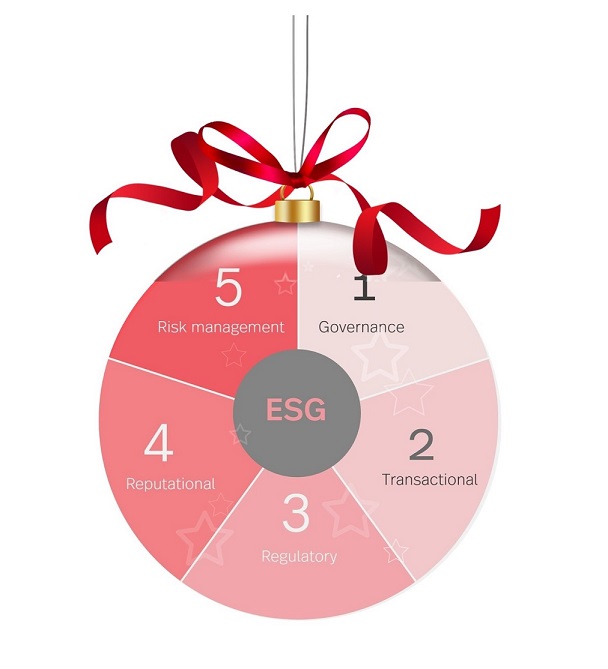
For this ESG View, we’ve chosen to bring you a shorter (and hopefully sweeter) edition, focusing on the ESG trends that defined 2022. We’ll first speak to some of the global trends that have shaped the ESG landscape and then deep-dive into a selection of key developments across our five core ESG legal touchpoints: governance, transactional, regulatory, reputational, and risk management.
Looking ahead, 2023 promises to be another exciting year for ESG. Stay tuned for our ‘ESG predictions for 2023’ in Simmons & Simmons’ ‘The Year Ahead’ article alongside our Global Insights Webinar. Also, keep an eye out in the new year for the registration to the annual Global Legal Business Outlook 2023 event (28th February – 2nd March) focused solely on ESG!
Sonali Siriwardena
Partner - Global Head of ESG
E sonali.siriwardena@simmons-simmons.com
The changing tides of a global landscape
At the start of the year, few could have predicted that it would be dominated by news of the Russia-Ukraine war. The implications of the conflict reached beyond the front lines and impacted global food and energy supplies. Geopolitical tensions and the global economic downturn marred progress on international cooperation on climate change. Gatherings like the UN General Assembly and the 27th Conference of Parties (COP27) called for greater action, but the tone at the end of the year seems to be one of climate fatigue. Read more on our legal analysis of COP27 in our COP27 Briefing Paper.
The feeling of fatigue was not helped by the global wave of ESG regulation and fragmentation that companies and investors have had to navigate. The development of green taxonomies, mandatory climate reporting and measures to prevent greenwashing continued to be a primary focus in 2022. However, global and national bodies also turned their attention towards greater regulation of the ‘S’ and ‘G’ pillars of ESG. As a result of this race to legislate, companies and investors are struggling to respond to an increasingly complex web of regulations. The need to harmonise global standards, taxonomies and data has never been greater.
However, 2022 cannot be seen as a complete write-off for the ESG agenda. There were monumental strides in the policy push for a global green energy transition. The International Energy Agency reported that the world is set to add as much renewable power in the next five years as it did in the past twenty. This is partially due to the global energy crisis and ambitious regulatory and policy reforms in countries like the US, China and India.
The year also saw the resilience of collaboration by market actors in the face of challenging market conditions and a vocal anti-ESG backlash. For example, the Glasgow Financial Alliance for Net Zero continued to grow in membership to over 500 financial firms, despite being caught in the cross-hairs of the politicised anti-ESG movement in the US, anti-trust critiques and a challenging de-coupling from the UN’s Race to Zero criteria. We saw similar collaborative ambition from the corporate world, for example, with the launch of the Corporate Coalition for Innovation and Technology toward Net Zero founded by six global cross-sector businesses; Bechtel, GE, GM, Honeywell, Invenergy, and Johnson Controls.
The progress in amplifying more voices within the climate conversation this year is yet another reason to be optimistic. Developing nations banded together to push for and achieve an historic agreement on the Loss and Damage Fund and to progress adaptation funding at COP27.
We believe this cross-regional policy push and cross-sectoral collaboration will help maintain the ESG momentum over 2023.
Governance
The ‘G’ of ESG is often considered table stakes and does not attract the same level of attention as the ‘E’ and, increasingly, the ‘S’. However, appropriate and robust governance structures and processes within companies are essential for the success of the ESG agenda as a whole.
Historically, ESG has struggled to find a clear home within corporate structures; therefore, board-level accountability for ESG has remained an elusive metric. That dynamic appears to be changing with the rise of the Chief Sustainability Officer (CSO) as a C-suite role within corporates. PwC reported earlier this year that of the 1,640 companies they surveyed, just under one-third now had a formal CSO role, a significant increase from the position ten years ago.
The role of the board and senior management in embedding ESG within the organisational fabric is gaining increased traction. One key manifestation of this evolution is the growing focus on aligning executive incentives with ESG targets and the integration of ESG metrics in remuneration structures. The Investment Association’s Letter to remuneration committee chairs of FTSE 350 companies and the Financial Conduct Authority’s Dear Remuneration Chair Letter in the UK highlighted the growing market expectations of such remuneration. A position supported by the proxy voting guidelines issued by Glass Lewis and ISS for 2023.
Investor and supervisory expectations on diversity and inclusion also gained momentum. 2022 has seen the EU adopt its Gender Balance Directive and the UK introduce board diversity targets.
Transactional
Despite the geopolitical upheaval and market volatility that shaped 2022, there has been a steady demand for sustainable investments, allowing the market to hold up well against the overall negative downturn. While, global sustainable funds attracted USD 22.5 billion of net new money in the third quarter of 2022, less than the revised USD 33.9 billion of inflows in the second quarter, they still held up better than the broader market, which experienced USD 198 billion of net outflows over the period. Europe continued to make up the lion's share of the sustainable fund landscape, with 82% of global sustainable fund assets. It also remains by far the most developed and diverse ESG market, followed by the U.S., which housed 12% of global sustainable fund assets through September 2022 (Morningstar, Global Sustainable Fund Report).
So, while not immune to market volatility, investors' growing desire for investments that suit their sustainability choices has allowed the market to stay resilient in 2022. Businesses continue to innovate at pace in launching products and services focused on ESG, whether that be structuring financial products to facilitate the climate transition, manufacturing goods with a reduced environmental footprint or launching funds with a sustainability-focused objective. The market has also been bolstered by policies that aim to incentivise the renewables sector and to support the reduction of waste and pollution, through proposals such as the pivotal US Inflation Reduction Act and the UK’s Plastics Packaging Tax.
However, the ESG market continues to face a number of challenges. The volume of regulation has increased the complex compliance uplift for sustainability-focused products and services. The politization of ESG has posed another headwind. For example, 2022 saw the rise of the anti-ESG wave in the US, with Texas leading the way and blocking 10 companies and 348 investment funds on the basis that ESG-driven investing was “harmful” to states’ economies. Other ‘red’ states soon followed. This battle will no doubt continue into 2023 (see our October ESG View and watch the recordings of our ESG December event Navigating the Rising Tide of ESG Policy, Regulation and Litigation across the US, Europe and the UK for a recap on these developments).
Regulatory
A tidal wave of regulation seems like a fitting description of what we have seen in 2022 as the global ESG framework of voluntary codes and guidance continues to be replaced by codified mandatory obligations. While Europe continues to lead the way, the UK, US and Asia-Pacific have also taken active steps to legislate on net zero.
Developing a green taxonomy continued to be a primary focus for many regulators in 2022, with Asia-Pacific particularly pushing ahead. At the beginning of the year, Indonesia launched the country’s first green taxonomy as part of its Sustainable Finance Roadmap Phase II. In May, Singapore’s Green Finance Industry Taskforce, issued its second consultation, building on its January 2021 proposed taxonomy, which it aims to finalise in 2023. And just this month, the Australian Sustainable Finance Institute Taxonomy Project, published for consultation its proposed framework for developing Australia’s finance taxonomy. As many countries are pushing ahead, the UK has hit a road-block and announced it will not finalise its taxonomy legislation by 1 January 2023, as planned. Taking a cautious approach, the UK seeks to watch and learn from the EU and will revisit its strategy in 2023.
In efforts to ensure investors have access to transparent and trusted data, climate disclosure reporting continued to hold centre stage in 2022. With the EU remaining focused on preparing for phase 2 of the Sustainable Finance Disclosure Regulation, the UK has now followed in its footsteps by proposing its own Sustainable Disclosure Requirements regime. The US and Australia have also taken steps towards their own climate-related disclosure regimes that are yet to be finalised. In 2022, we also saw the proposed drafts of the climate disclosure standards from the International Sustainability Standards Board and the European Financial Reporting Advisory Group, all of which we will hear more about in the new year.
2022 also saw the focus on climate expand to nature. In October, the WWF's 2022 Living Planet Report revealed that biodiversity around the world is crashing at a startling rate, with global wildlife populations diminishing by 69% in the last 48 years. Such reports have had a sobering effect, and biodiversity seems to be coming to the top of the agenda. Ahead of the UN Biodiversity Conference (COP15), the Taskforce on Nature-related Financial Disclosures has released the third version of its beta framework for consultation, and the Global Reporting Initiative has opened its revised GRI Biodiversity Standard for comment. There is an urgency that is being felt globally, which has culminated in the adoption of an ambitious Kunming-Montreal Global Biodiversity Framework at COP15, which ended this week.
As the world began its post pandemic recovery and faced inflation and rising living costs, social issues also attracted more regulatory attention in 2022. In September, the Global Reporting Initiative announced its intention to enhance human rights into its disclosure requirements. In the same month, the Japanese government published its Guidelines on Respecting Human Rights in Responsible Supply Chains. Whilst the EU’s Corporate Sustainability Due Diligence Directive continues to be held up by fierce negotiations, the Corporate Sustainability Reporting Directive was finally published in the official journal last week, introducing detailed disclosures under the ‘S’ pillar. The EU also saw this year the adoption of the Women’s on Boards Directive and a proposal to apply a ban on products tainted by forced labour.
Reputational
In 2022, ESG reputational risks and rewards became palpable with increased scrutiny across sectors. We saw the conversation on ESG move away from one of ‘ambitious commitments’ to ‘implementation’ and ‘action’.
The UN High-Level Expert Group on the Net Zero Emissions Commitments of Non-State Entities (UNHLEG) released a timely report containing ten recommendations to increase integrity, transparency and accountability to net zero claims by non-state actors. The message was received loud and clear by all - there will be “zero tolerance for greenwashing” moving forward. Greenwashing litigation and regulatory enforcement risks continued to be of concern and reinforced the message of UNHLEG (as discussed within the below ‘Risk Management’ section). Furthermore, shareholder activism continued to drive the ESG agenda and put companies under the spotlight. There were more ESG-related shareholder proposals filed this year than in any previous proxy season, with key themes being transparency on governance and climate commitment integrity. In the US, shareholders called for big tech firms to have greater tax transparency, while in Europe, shareholders may be taking a car manufacturer to court to require climate-related lobbying transparency.
Interestingly, environmental filings were outnumbered by social ones this year, with over a third of environmental proposals withdrawn and acted upon outside of the voting procedure (PRI, 2022). Given the less quantifiable nature and more subjective approach to ‘S’ issues, we saw more nuanced conversations on these shareholder resolutions. Companies face challenging decisions in balancing the ‘E’, ‘S’ and ‘G’ and competing fiduciary obligations. We anticipate that these more nuanced and intentional conversations will continue in the next proxy season.
The increased focus on integrity and greater scrutiny have also meant a rise in ‘green bleaching’ and ‘green hushing’. This emerging phenomena is seen when companies actively refrain from making ESG-commitments in order to avoid potential ESG disclosure obligations and mitigate any associated risks. It’s clear that market-actors are trying to navigate the choppy waters of reputational risk by proactive means; however, with increasing mandatory disclosure rules, it’s unclear how productive and enduring these practices will be.
Risk Management
2022 has seen a number of trends for ESG related litigation and enforcement action, which companies should consider as part of their risk management.
The courts have shown a willingness to hear and rule on climate litigation. For example, in July, the English High Court ruled that the UK government’s plan to reduce greenhouse gas emissions to net zero by 2050 is too vague and therefore unlawful. The Court then ordered the UK government to publish an updated climate report by the end of March 2023, setting out further detail on how its net zero goal will be achieved. There have been similar decisions across Europe, such as in Spain and Germany. These types of litigation demonstrate the increasing willingness of the judiciary to enforce climate legislation, giving it teeth. We are also starting to see the mounting pressure on governments to lower emissions passed on to corporates.
The courts have also had an increased willingness to hear claims holding corporates accountable for the actions of their offshore subsidiaries. The English Court of Appeal held that claims brought in the English courts by over 200,000 claimants arising out of the 2015 collapse of the Fundão Dam in Brazil can proceed. There have been similar movements by the judiciary in Germany (Saul Luciano v RWE) and claims in France in relation to Ugandan mining projects. Companies should see it as a stark warning - they can be held to account in their local courts for the actions of their foreign subsidiaries and joint ventures.
Greenwashing and mis-selling claims continue to be a primary focus for NGOs and climate activists as well as regulators. The investment management sector has seen multiple cases of enforcement against asset managers both in the US and in Europe. Additionally, climate litigation against corporates continues to grow. Actions have been brought across the globe, often focused on net zero claims. Several actions are being brought by the Advertising Standards Authority in the UK. For example, banks and supermarkets have been warned over using certain adverts to ‘greenwash’ their reputations. The voice of NGOs and activists continues to grow in strength as they increasingly look to effect change as shareholder activists.
Recent Publications
- COP27: analysis and outcomes from the 2022 climate summit (13 December 2022)
- ESG: FCA announces Code of Conduct for ESG data and ratings providers (23 November 2022)
- ESG: ESMA consults on guidelines for ESG-related funds’ names (21 November 2022)





.jpg?crop=300,495&format=webply&auto=webp)

_11zon.jpg?crop=300,495&format=webply&auto=webp)




_11zon.jpg?crop=300,495&format=webply&auto=webp)




.jpg?crop=300,495&format=webply&auto=webp)